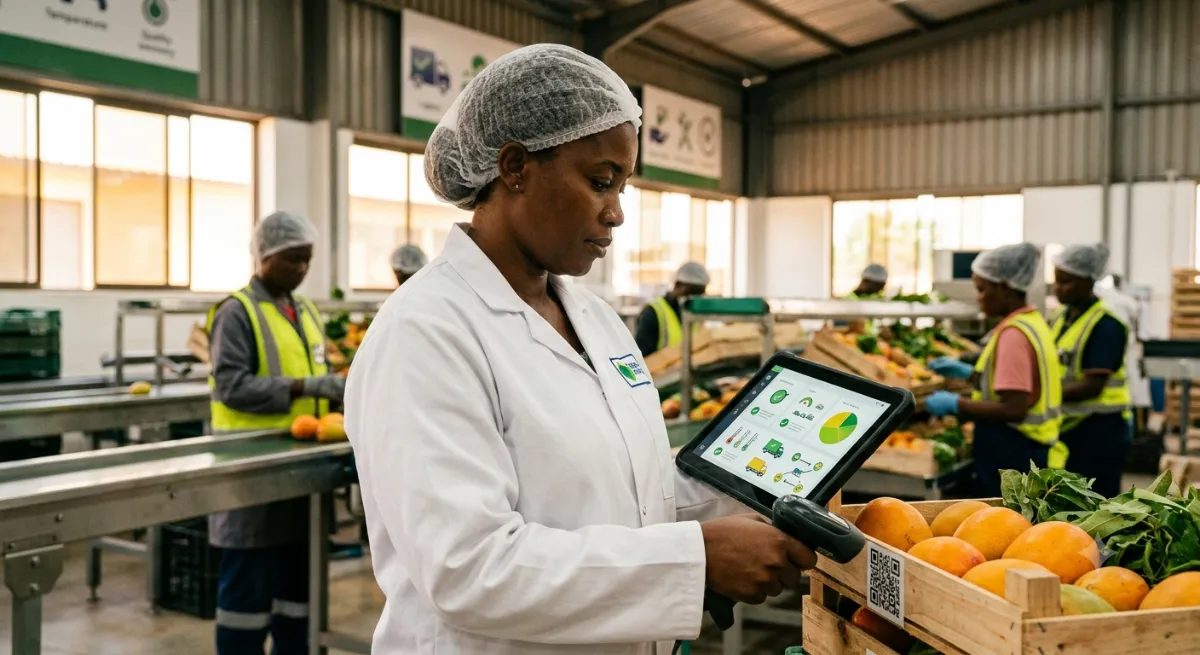
Data is Gold: Stop Guesswork Killing Your Food Production Profits
Zaagob Intelligence
ZAAGOB Expert

The Era of Guesswork: A Silent Killer of African Food Production Profits
In the vibrant, competitive landscape of African food production, a silent killer often erodes profitability long before sales figures are even considered. It’s not the market, nor the raw material costs alone; it is the insidious reliance on guesswork.
For too long, businesses from bustling commercial bakeries to sophisticated water bottling plants have operated on intuition, legacy practices, and approximations. This approach, while once perhaps viable, is now a direct threat to sustainability and growth.
The future belongs to the data-driven. The visionary leaders who understand that
The Peril of Approximation: Where Guesswork Hits Hardest
Guesswork manifests in multiple critical areas, each silently siphoning off precious profit margins.
1. Flawed Raw Material Costing
Imagine a snack manufacturer in Lagos estimating flour costs rather than tracking real-time supplier prices and yield variations. Or a poultry processor manually calculating feed-to-weight ratios.
Without precise, dynamic costing, product pricing becomes arbitrary, eroding margins or alienating customers. A discrepancy of just ₦50 per kilogram over thousands of units daily translates to millions in annual losses.
2. Inventory Blind Spots and Leakage
A bakery relying on daily visual checks for ingredients misses significant spoilage or pilferage. A water bottling plant without automated EOD inventory resets has no true picture of stock levels.
Untracked inventory is often assumed lost or consumed, masking inefficiencies. Losing just ₦10,000 per day in untracked waste or expired stock accumulates to over ₦3.6 million in lost profit annually.
3. Inefficient Batch Planning and Production
Manual batch planning for mixed products often leads to suboptimal ingredient usage, excessive downtime between batches, or over-production of less popular items.
This results in wasted energy, labour, and raw materials. For a food factory, even a 5% inefficiency in batch execution can mean significant revenue drain and missed market opportunities.
4. Undiagnosed Spoilage and Waste Attribution
When spoilage occurs, how many businesses can accurately attribute it? Was it a faulty raw material batch? An error in storage temperature? A delay in processing?
Without precise attribution, corrective actions are impossible. Businesses simply absorb the loss, unable to identify the root cause or prevent recurrence. This cyclical wastage undermines operational integrity.
The Data Revolution: Unlocking Systemic Efficiency
The answer to scaling profitably in Africa is not to simply scale operations; it is to
Precision in Raw Material Costing
Embrace systems that provide real-time, dynamic raw material costing. This means factoring in purchase price, freight, storage, and even yield variations across different suppliers.
This empowers accurate pricing, competitive bidding, and strategic supplier negotiations, ensuring every product's true cost is known and optimized.
Dynamic Batch Planning & Optimization
Leverage technology to orchestrate complex production schedules. From standard bread batches to intricate mixed pastry lines or multi-stage beverage production, dynamic planning minimizes waste, maximizes throughput, and optimizes resource allocation.
This reduces human error and ensures production aligns perfectly with demand, preventing overstocking and reducing spoilage.
Real-time Inventory & Spoilage Attribution
Implement automated inventory management. Know what’s in stock, where it is, and its shelf life at any given moment. Crucially, track spoilage with analytical rigor.
Identify
Integrated CRM for Market Insight
Beyond the factory floor, data transforms market engagement. An integrated CRM allows for precise tracking of customer preferences, order histories, and communication.
This fosters stronger relationships, anticipates demand, and informs product development – turning customer data into strategic advantage.
ZAAGOB: Pioneering the Future of African Food Production
This visionary future is not distant; it is here. ZAAGOB is engineered precisely for this paradigm shift.
As an advanced, premium cloud ERP & CRM operating system, ZAAGOB provides end-to-end management for raw material costing, dynamic batch planning (standard, mixed, sub-batches), automated EOD inventory resets, spoilage attribution analytics, and integrated CRM communication tools.
ZAAGOB is designed to eliminate guesswork, replacing it with the precision and insight required to thrive. It empowers Nigerian and African food production businesses, commercial bakeries, food factories, kitchens, and water bottling operations to transform raw materials into pure profit.
It’s about building a robust, data-driven foundation for sustained growth, systemic efficiency, and unyielding profitability across the continent.
Frequently Asked Questions
What is the primary challenge facing African food producers?
Many African food producers struggle with profitability due to reliance on guesswork rather than precise data for operations, leading to significant waste, inefficient planning, and inaccurate costing.
How does guesswork impact profitability in food factories?
Guesswork leads to flawed raw material costing, inventory blind spots, inefficient batch planning, and undiagnosed spoilage, cumulatively eroding profit margins and hindering growth.
What is "spoilage attribution analytics"?
Spoilage attribution analytics is the process of precisely identifying the root cause of spoilage (e.g., supplier issue, storage error, processing mistake) to enable targeted corrective actions and prevent future losses.
How can data improve raw material costing?
Data allows for real-time tracking of purchase prices, freight, storage, and yield variations, ensuring dynamic and accurate product costing, which informs pricing strategies and supplier negotiations.
What role does ZAAGOB play in this transformation?
ZAAGOB is an advanced cloud ERP & CRM system that provides end-to-end data management for food production businesses, enabling precise raw material costing, dynamic batch planning, automated inventory resets, and spoilage attribution analytics to replace guesswork with data-driven profitability.
Get the ZAAGOB Production Newsletter
Join 500+ food business owners receiving weekly strategies on unit economics, AI operations, and market growth.
FoodYield Intelligence
Weekly unit economics audits, demand forecasting tips, and AI strategies for African food producers.
Zero spam. Only high-value production intelligence.